

How Climate Determines Your Energy Rating
NatHERS star ratings are not fixed benchmarks that apply uniformly across Australia. They are calculated relative to the specific climate conditions of a building’s location.
A home design that achieves 7.5 stars in coastal Queensland may fall short of 7 stars in regional Victoria, even if every material, window and insulation specification is identical. The difference lies in climate.
NatHERS climate zones form the foundation of thermal performance modelling under the Nationwide House Energy Rating Scheme.
Understanding how they work is critical for architects, designers, builders and homeowners aiming to achieve compliance under NCC (National Construction Code) 2022 without unnecessary redesign or construction cost escalation.
Key Takeaways
- NatHERS uses 69 detailed climate zones across Australia, each based on long-term hourly weather data.
- Star ratings are climate-relative, meaning the same house design can achieve different ratings in different locations.
- Heating and cooling loads are calculated separately, then combined to determine the final star rating.
- Climate zones influence insulation, glazing, shading and orientation requirements needed to achieve 7 stars.
- NatHERS climate zones differ from NCC’s 8 broad climate zones, which are used for prescriptive compliance.
- Thermal modelling simulates a full year of performance (8,760 hours) using approved software.
- Early-stage modelling reduces compliance risk, avoids costly redesign, and improves cost efficiency.
What Are NatHERS Climate Zones?
NatHERS climate zones divide Australia into 69 distinct geographic regions, each defined by long-term meteorological data.
Each zone reflects:
- Hourly temperature variations
- Seasonal heating and cooling patterns
- Solar radiation intensity
- Humidity levels
- Wind conditions
- Diurnal temperature swings
Unlike general climate labels such as “tropical” or “temperate,” NatHERS zones are highly specific. They are designed to support performance-based thermal modelling rather than broad regulatory classification.

NatHERS climate files are developed using long-term Bureau of Meteorology weather data and constructed as Typical Meteorological Year (TMY) datasets. Each file contains 8,760 hourly data points, including dry bulb temperature, humidity, wind speed and solar radiation intensity.
Every NatHERS assessment uses climate data specific to the dwelling’s postcode or exact geographic location. This ensures that the calculated energy demand reflects realistic environmental conditions across a full year of operation.
In simple terms, a NatHERS star rating measures how efficiently a home maintains thermal comfort within its specific climate zone.
NatHERS Climate Zones Map
The NatHERS Climate Zone Map illustrates the 69 modelling regions across Australia. Key observations include:
- Coastal and inland areas are often separate zones
- Elevation changes can create distinct climate categories
- Major cities may contain multiple zones
- Northern Australia includes multiple hot-humid and hot-dry zones
- Southern Australia includes cool temperate and alpine-influenced zones
It is important to note that climate zone boundaries do not always align with suburb boundaries. Two neighbouring properties may technically fall into different NatHERS zones.
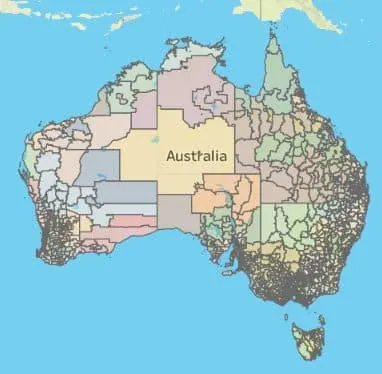
Because compliance modelling depends on correct zone allocation, confirmation by an accredited NatHERS assessor is recommended before finalising performance strategy.
How NatHERS Ratings Are Calculated
This is the core technical component of NatHERS modelling and where climate data becomes critical.
1. Performance-Based Thermal Simulation
NatHERS assessments are conducted using accredited thermal modelling software such as:
- FirstRate5
- AccuRate
- HERO
These programs simulate the building’s thermal performance using:
- Building geometry
- Construction materials
- Insulation levels
- Glazing type (U-value and Solar Heat Gain Coefficient)
- Shading devices
- Thermal mass
- Air infiltration rates
- Orientation
- Zoning of internal spaces
The software then applies hourly climate data for the specific NatHERS zone and runs a full-year simulation (8,760 hours).
For each hour of the year, the software calculates:
- Indoor temperature response
- Solar heat gain
- Heat transfer through walls, roof and floor
- Ventilation heat exchange
- Required heating or cooling input to maintain comfort
This produces two primary outputs:
- Annual heating load (MJ/m² per year)
- Annual cooling load (MJ/m² per year)
These loads are combined and benchmarked against zone-specific performance thresholds.
2. Climate-Specific Benchmarks
Each climate zone has different allowable heating and cooling load limits.
For example:
- In cooler climates, heating demand is naturally higher, so the modelling focuses on reducing heat loss.
- In warmer climates, cooling demand dominates, so reducing solar gain and improving ventilation is critical.
A 7-star rating does not mean the same absolute energy demand in every zone. It means the home performs efficiently relative to its climate.
This distinction is essential. NatHERS star ratings are climate-relative performance scores – not universal energy benchmarks.
How Climate Zones Affect Your NatHERS Rating
Climate zones influence star ratings in several interconnected ways.
Heating-Dominated Climates
In cooler regions such as Canberra or Tasmania:
- Winter temperatures drop significantly.
- Heating demand becomes the dominant load.
- Heat loss through glazing and walls becomes critical.
- Insulation performance is heavily scrutinised.
In these climates, achieving 7 stars typically requires:
- Higher R-value insulation
- Improved glazing performance
- Reduced air leakage
- Thermal mass to store daytime solar gain
Without these measures, heating loads can exceed allowable thresholds, reducing the star rating.


Cooling-Dominated Climates
In warm or hot-humid regions such as northern Queensland:
- Cooling demand dominates performance.
- Solar radiation intensity is high.
- Humidity influences comfort thresholds.
Key performance factors include:
- External shading
- Reduced west-facing glazing
- Roof reflectivity
- Cross ventilation
- Ceiling insulation
Even well-insulated homes can perform poorly if solar gain is not controlled.
Mixed Climates
In temperate regions such as Sydney or Perth:
- Both heating and cooling loads are relevant.
- Seasonal performance balance is required.
- Overemphasis on one strategy may compromise the other.
This requires nuanced modelling to balance insulation, glazing and shading design.
Same Design, Different Outcome
To understand how NatHERS climate zones influence performance, consider a standard double-storey brick veneer home with:
- R2.5 wall insulation
- R4.0 ceiling insulation
- Double-glazed windows
- Moderate north-facing glazing
- Typical slab-on-ground construction
At first glance, this appears to be a well-specified home. However, the NatHERS outcome depends entirely on its climate zone.
In Brisbane (NatHERS Warm Humid Subtropical Zone – South East QLD)
Brisbane falls within a warm humid NatHERS climate zone typical of South East Queensland. These zones are characterised by:
- Long, hot summers
- High humidity
- Strong solar radiation
- Mild winters with low heating demand
- Significant night-time temperatures in summer
Within this climate profile:
- Cooling loads dominate the star rating outcome
- Solar heat gain through glazing becomes critical
- Roof insulation and shading performance heavily influence results
- Ventilation strategies improve summer performance

In this environment, the example home may achieve around 7.5 stars if shading is well designed and glazing solar heat gain is controlled. Heating demand is relatively minor, so wall insulation levels may be adequate without further upgrades.
Performance optimisation in this zone typically focuses on:
- External shading to west and north glazing
- Reducing excessive glazing ratios
- Reflective roofing materials
- Ceiling insulation performance
- Cross ventilation pathways
In Melbourne (NatHERS Cool Temperate Zone – Southern Victoria)
Melbourne falls within a cool temperate NatHERS modelling zone typical of southern Victoria. These zones are characterised by:
- Cold winters
- Frequent overnight low temperatures
- Moderate summers
- High annual heating demand
- Lower humidity compared to subtropical climates
In this climate:
- Heating loads dominate annual energy demand
- Heat loss through walls, glazing and roof significantly impacts performance
- Airtightness becomes more influential
- Solar access in winter is beneficial

Under the same specification, the home may fall below 7 stars in Melbourne unless improvements are made to:
- Wall insulation (e.g. increasing R-values)
- Glazing U-values (improving thermal resistance)
- Air leakage control
- Thermal mass to capture winter sun
Even though the design worked well in Brisbane, the higher heating demand in Melbourne increases total annual energy requirements, reducing the final star rating.
Why This Matters
NatHERS modelling does not reward specifications in isolation, it evaluates how effectively those specifications respond to the specific climate zone and climate-related data.
The same materials, insulation and glazing can perform very differently depending on:
- Annual heating degree days
- Cooling degree days
- Solar exposure
- Humidity levels
- Diurnal temperature variation
This is why copying a specification from another state, or even another region within the same state, can result in unexpected compliance shortfalls due to differing climatic conditions.
A 7-star solution in one NatHERS climate zone is not automatically a 7-star solution in another.
NatHERS Climate Zones vs NCC Climate Zones
Although the terms are sometimes used interchangeably, NatHERS climate zones and NCC climate zones serve different purposes within Australia’s building regulatory framework. Confusing the two can lead to incorrect assumptions about compliance requirements.
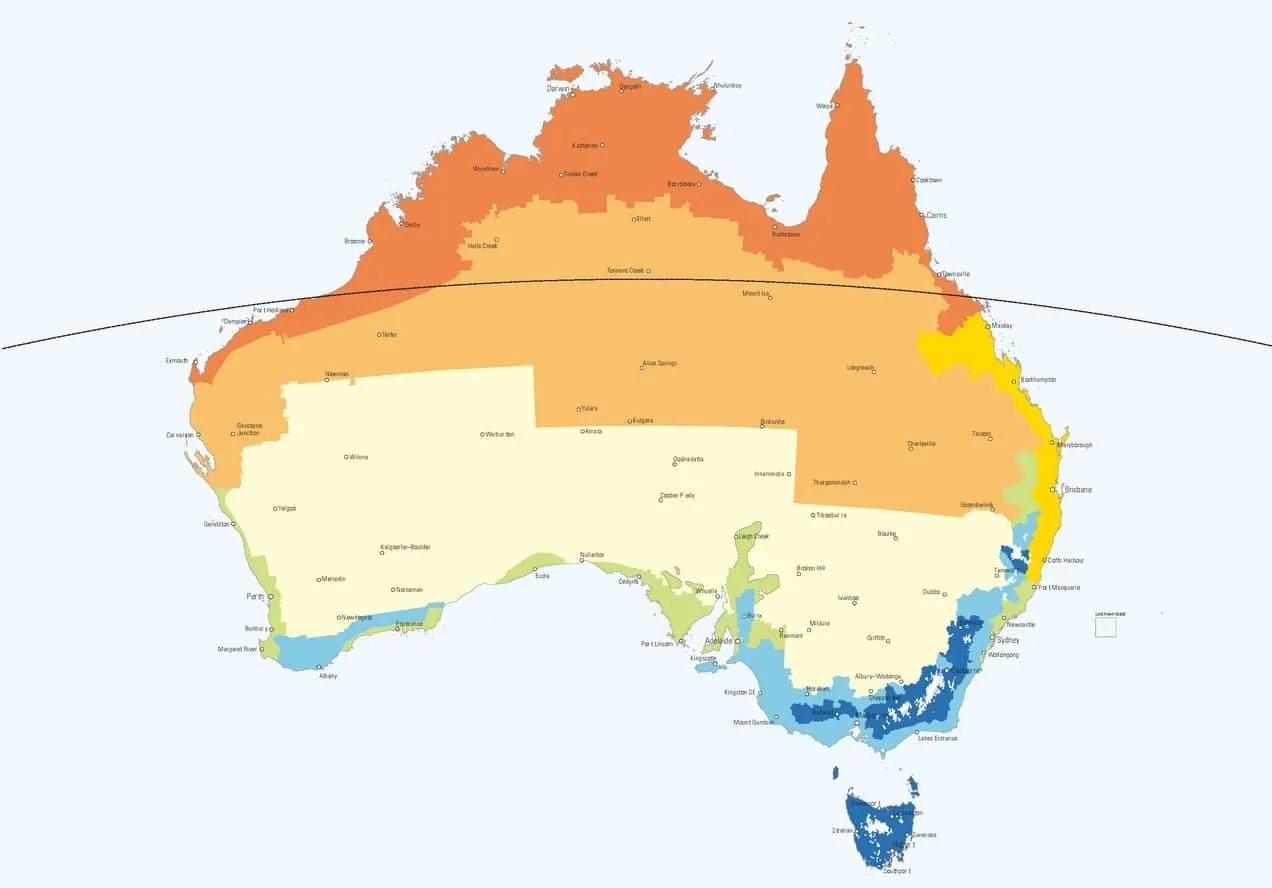
NCC Climate Zones (8 Broad Zones)
The National Construction Code (NCC) divides Australia into 8 broad climate zones. These zones are used primarily within the Deemed-to-Satisfy provisions of the NCC and provide general guidance for:
- Minimum insulation R-values
- Glazing performance requirements
- Building fabric provisions
- Condensation management
- Prescriptive construction pathways
These zones are relatively broad and are designed to simplify regulatory requirements across large geographic regions. For example, much of southern Australia may fall within one NCC climate category, despite meaningful variations in local weather conditions.
The NCC climate zones are suitable for prescriptive compliance pathways, but they are not detailed enough for performance-based thermal modelling.
NatHERS Climate Zones (69 Detailed Modelling Zones)
In contrast, NatHERS divides Australia into 69 highly specific climate zones, developed using detailed long-term meteorological datasets.
These zones are used exclusively for:
- Performance-based thermal modelling
- Annual heating and cooling load calculations
- Star rating determination
Each NatHERS climate zone incorporates:
- Hourly temperature data
- Solar radiation intensity
- Humidity profiles
- Seasonal variability
- Local climatic extremes
This level of detail allows NatHERS software to simulate a dwelling’s performance across 8,760 hours of the year with significantly greater precision than the NCC’s broad regional categories.
Why the Difference Matters
When using the NatHERS pathway to demonstrate compliance under NCC 2022, it is the 69-zone NatHERS framework that determines the heating and cooling performance thresholds required to achieve 7 stars, not the 8 NCC climate zones.
This distinction is critical because:
- Two homes within the same NCC zone may fall into different NatHERS zones.
- Heating and cooling load targets are set by NatHERS zone, not NCC zone.
- Design responses required to achieve compliance may differ accordingly.
In practice, the NCC sets the minimum energy efficiency requirement, while NatHERS provides the performance modelling mechanism used to demonstrate that requirement has been met.
|
NCC Climate Zones
|
NatHERS Climate Zones
|
|---|---|
|
8 broad regions
|
69 detailed modelling zones
|
|
Used for prescriptive compliance
|
Used for performance simulation
|
|
General climatic categories
|
Based on hourly meteorological datasets
|
|
Simpler regulatory framework
|
Advanced thermal modelling framework
|
Understanding how these two systems interact ensures accurate compliance strategy and prevents incorrect specification assumptions early in the design process.

Why Early Climate Consideration Is Critical for Compliance
Many compliance issues arise because climate is considered too late in the design process.
Common problems include:
- Excessive glazing ratios
- Poor orientation strategy
- Under-specified insulation
- Overheating risk in summer
When modelling is completed late:
- Plans may require redesign
- Construction documentation may need revision
- Costs may increase
- Approval timelines may extend
Engaging an accredited NatHERS assessor during concept design allows climate-responsive optimisation before documentation is finalised.
This reduces compliance risk and often lowers overall build cost.
Frequently Asked Questions
How do I find my exact NatHERS climate zone?
Your climate zone is determined using your property’s geographic location. An accredited assessor confirms the zone during modelling using approved software linked to NatHERS datasets. Use this interactive map for a general idea.
Can climate zone boundaries change?
Climate zones are periodically reviewed as modelling datasets are updated. However, changes are infrequent and typically minor.
Does climate zone affect the Whole of Home rating?
Yes. While Whole of Home includes appliance efficiency, heating and cooling demand, which is climate-dependent, still influences overall energy performance.
Why does my neighbour have a different rating?
Differences may arise due to:
- Orientation
- Construction materials
- Glazing type
- Insulation levels
- Internal layout
Even within the same climate zone, design variations impact performance.
Do climate zones affect renovation requirements?
Yes. Extensions and alterations must meet current performance thresholds relative to the applicable climate zone.
Is NatHERS the only way to demonstrate compliance?
No. While NatHERS is the most widely used pathway for demonstrating residential energy efficiency compliance under NCC 2022, it is not the only option permitted by the Australian Building Codes Board. Alternative pathways include:
- Deemed-to-Satisfy (DTS) provisions, which follow prescriptive insulation, glazing and building fabric requirements outlined in NCC Volume Two;
- Verification Methods, where the dwelling’s performance is compared against a compliant reference building using approved modelling; and
- Performance Solutions, which use project-specific evidence and engineering justification to demonstrate compliance with the NCC Performance Requirements.
NatHERS remains the most common approach because it provides design flexibility and allows optimisation through thermal modelling rather than strict prescriptive construction tables.
Conclusion: Climate Is the Foundation of NatHERS Performance
NatHERS climate zones are not a minor technical detail, they are the basis upon which star ratings are calculated.
Every heating load, cooling load and compliance threshold is derived from climate-specific modelling.
Understanding this relationship:
- Prevents compliance risk
- Supports smarter design decisions
- Reduces costly redesign
- Improves long-term energy efficiency
Professional modelling ensures that your building design performs efficiently in its actual environment, not just on paper.
Confirm Your Climate Zone and Optimise Your Design Early
Because NatHERS star ratings are climate-specific, accurate modelling from the outset is essential for NCC compliance.
Green Choice Consulting provides Australia-wide NatHERS assessments using approved modelling software and detailed climate zone analysis. Whether you are at concept stage or preparing for building approval, our Director, Albert Burton, holds accreditation with Design Matters National and can:
- Confirm your exact NatHERS climate zone
- Model heating and cooling loads accurately
- Identify cost-effective compliance strategies
- Prepare compliant NatHERS certificates
Contact our team today to ensure your project meets energy efficiency requirements with clarity and confidence.


Ready to Start Your Sustainable Build?
Whether you're planning a new home or refining your current design, we can help you hit 7+ Stars performance and achieve Whole of Home compliance with confidence.